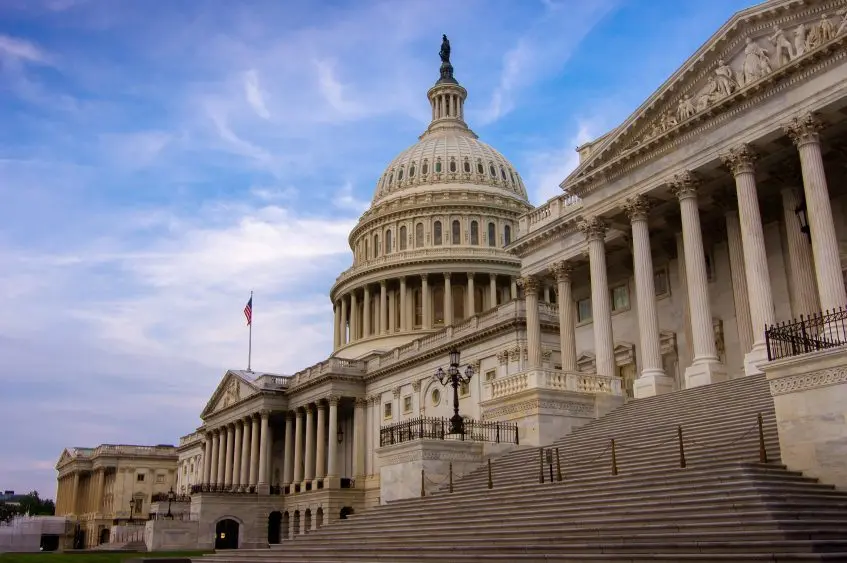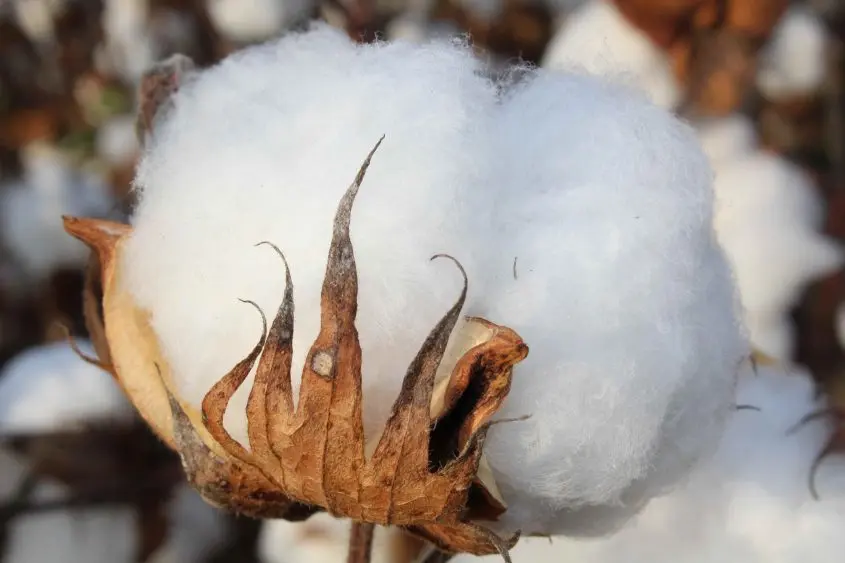
WASHINGTON, D.C. – U.S. Senator Cindy Hyde-Smith (R-Miss.) today argued that her legislation to incentivize the use of U.S.-grown cotton to stem the decline of domestic cotton production must be part of finding long-term solutions to sustain American agriculture.
Hyde-Smith promoted her Buying American Cotton Act (BACA) at a Tuesday Senate Agriculture Committee hearing titled, Increasing Domestic Consumption of U.S.-Grown Agricultural Products. The hearing featured witnesses from the cotton, corn, soybean, and fresh produce sectors.
“We in Washington need to adopt a comprehensive strategy for domestic consumption that lifts all of American agriculture. That is how all growers benefit, and it’s the only fix worth having. Today I am here to emphasize that complex problems are rarely solved with one simple solution, and that the Buying American Cotton Act should be part of the overall solution we’re seeking,” Hyde-Smith said.
BACA (S.1919) would establish tax credits to incentivize the use of U.S.-grown cotton and U.S. cotton-manufactured products like yarns and fabric in cotton-based products sold in the United States. Hyde-Smith offered the bipartisan measure as one long-term solution to stem the decline of domestic cotton production, which has seen a 50 percent decline in planted acres since the mid-1990s and, more dire, a 28 percent decline in the past four years.
“Here’s why we should care about the U.S. cotton industry and passing the Buying American Cotton Act. While cotton planted acreage is small compared to other major row crops, its economic output and associated jobs dwarf other major row crops on a per-acre basis – just do the math. The supply chain is far more intricate than other major row crops – that means jobs, money, more jobs, and more money,” Hyde-Smith said. “U.S. producers now have to export more than 85 percent of the cotton that they grow. Why can’t we use that here?”
National Cotton Council Chairman Nathan Reed warned in his testimony, “Our industry will not survive without stronger demand, and BACA would help position U.S. cotton to compete more effectively against synthetic fibers and against foreign cotton producers, including Brazil. The U.S. represents a 20-million-bale retail market for cotton finished goods, yet we estimate that only 4 million bales of that are U.S. cotton. BACA aims to correct this imbalance.”
Zippy Duvall, President of the American Farm Bureau Federation, also testified in favor of BACA.
“Your bill will incentivize companies to use American-grown cotton, which is a good thing for our cotton farmers,” Duvall said. “But the key thing is not only will it help farmers; it’s going to help rural communities. We’ve lost 1,700 cotton gins since 1980 – 1,700. That infrastructure will never be replaced again. Never be replaced again. And all the jobs that went with it and all the communities that depended on that infrastructure just went away. We’ve seen it all over the southeast and southern part of our country. So, that bill will be a tremendous help not only to farmers, cotton farmers, but it’ll be a big help for our rural communities in those areas of our country.”
At the hearing, Hyde-Smith entered into the record a letter of support for BACA signed by more than 80 industry stakeholders, textile mills, major brands and retailers, and Farm Bureaus from states across the country. In addition to organizations like the Delta Council, signers included retailers like Target, American Trench, GAP, and Dignity Apparel.
Overall, Hyde-Smith said Congress must “invest in long-term, demand-building initiatives” like BACA to reduce the need for ad hoc disaster assistance, while also providing another round of short-term support to supplement the Farmer Bridge Assistance Program until farm safety net reforms in the Working Families Tax Cut Act are implemented.
“This will help keep American farmers and ranchers in operation, while saving taxpayer dollars down the road,” Hyde-Smith said.