A surprise corn stocks revision, record-high diesel costs and shrinking marketing options for cattle feeders left producers with plenty to digest this week. Two market analysts, Mike Castle of StoneX in Kansas City, Missouri, and Scott Varilek of Kooima Kooima Varilek in Sioux Center, Iowa, joined Market Talk on Friday to sort through the pressure points across grain, livestock and the broader economy.
Corn Stocks Report Resets the Balance Sheet
USDA’s September 30 Grain Stocks report delivered the week’s biggest shock for grain traders. Castle, a senior commodities economist, did not mince words.
“Very ugly print on the corn side. There’s kind of no good way to sugarcoat that,” Castle said.
He said the frustration centers on USDA’s feed and residual number, which looked out of line all year. Castle noted USDA raised the figure by 150 million bushels in July when it had room to raise exports instead. When the September report arrived, last year’s corn production was cut by only 57 million bushels. By Castle’s math, removing roughly 230 million bushels from demand while trimming production left an extra 173 million bushels, lifting old-crop ending stocks from the 1.922 billion bushels in the September WASDE to 2.095 billion.
“Getting back above that psychological 2 billion mark is certainly a big bearish factor,” Castle said. He added that the heavier carry-in makes 2026-27 look larger and raises the bar for any rally.
Castle said demand support has not disappeared. The ongoing energy shock is incentivizing biofuel use, and he expects strong demand for U.S. corn exports in the year ahead, especially if the Black Sea remains disrupted. But he said it would take a much larger increase in demand, or a big drop in yield, to offset the added stocks.
Varilek said the report landed at a tough time. Funds had built a record long position in corn, and harvest pressure is on the way.
“When those funds want to get out, they can do it pretty quick,” Varilek said. He expects a challenging near term, though he is not writing off demand. “I don’t want to totally write it off and give up on it, but this short term here is just going to be a stinker.”
Wet weather has also slowed fieldwork in parts of the Corn Belt. Varilek said he has heard stories of sprouting corn in the ear and beans on the ground, but he does not yet know how widespread the problem is. A better forecast should open a window for harvest to start moving next week.
Diesel and Input Costs Squeeze Margins
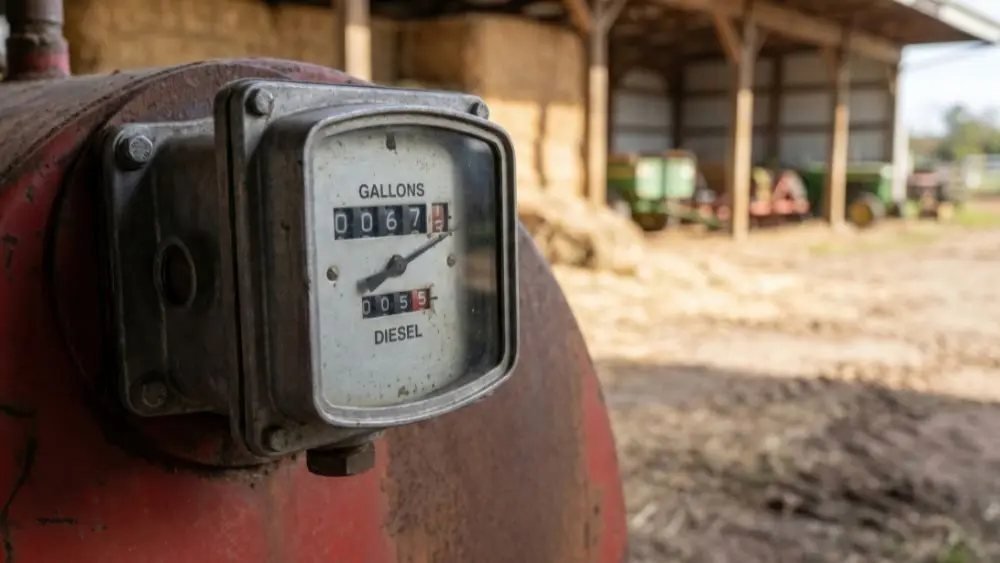
Castle pointed to a second pressure on farm profitability: fuel. He said the ratio between diesel and corn prices is “the worst it’s been in around 20 years.”
“Unfortunately, what it really just translates to at the farm level is margin compression,” Castle said. He noted the demand is inelastic. A farmer still has to fill the tank to harvest, no matter the price.
Castle said national diesel prices have hit record highs, with distillate stocks “the tightest they’ve been at this point in the year in history.” He cited the Middle East as the largest source of barrel disruption and said the timing of a Joliet refinery outage was unhelpful. A pledge from the European Union to release 50 million barrels of reserves offers some relief, he said.
The cost pressure will not stop at the farm gate. Castle expects consumer inflation to move higher into the end of 2026 and 2027 as producers pass along higher freight and energy costs. He said that backdrop keeps the Fed focused on inflation, though softer economic data this week pushed expectations for the next rate hike from October toward December.
Cattle Market Splits by Region; Hogs Struggle to Capture Beef’s Strength
In cattle, Varilek said even a long conversation would leave him mixed on whether he is bullish or bearish. Technicals look reasonable after a rally that came close to overbought, though futures fell on Friday. The cash market, he said, tells different stories by region. Southern trade has been steady, while the north is struggling. Varilek said some packers offered $218 to $218.50 live and $345 to $350 dressed, enough to move cattle but not enough to ease concern about whether pens are backing up.
Packing plant closures are a major reason. “We get three plants closed up here and now it gets tougher to sell cattle,” Varilek said. He said feeders in the East and Missouri who lost marketing options are calling him for help finding a buyer.
He sees consolidation changing how cattle are sold. Packers want more formula trades and less risk, and they are pushing beef on dairy because those calves can be scheduled well in advance. “I mean, I don’t want that,” Varilek said of a model resembling the hog industry. “But that’s economically what’s doing.”
On demand, Varilek said consumers still want beef and he expects demand to carry the market once heavy cattle and extra imports work through the system. In the meantime, he said the Choice/Select spread has widened to $18 to $20 at a time when it normally narrows, and he described feeders losing about $500 a head on cows being fed out.
Varilek said the Hogs and Pigs report did not match what he sees in the country, where weaned pigs and feeders are easy to find at a discount and supplies are coming online. Pork demand remains sluggish, with bellies, picnics and hams struggling. He said pork has not capitalized on high beef prices, though he welcomed recent comments from politicians calling pork a cheaper protein option.
Managing Margin in a Volatile Market
Castle’s advice for producers was to watch the relationship that determines margin, including input markets. He said products exist to lock in margin on both the input and output sides.
“The market does still give you opportunities to take advantage and try to lock in some margin,” Castle said.
On fertilizer, he said nitrogen affordability is roughly average for the last five years, “Potash looks very cheap,” and phosphate remains expensive. Spring 2027 may feel far away, but Castle said this may be among the best buying opportunities, and a plan should be in place before prices move.
The views and opinions of this program are those of the hosts, guests and callers. There is substantial risk of loss in trading futures and options, which you should carefully consider prior to trading.