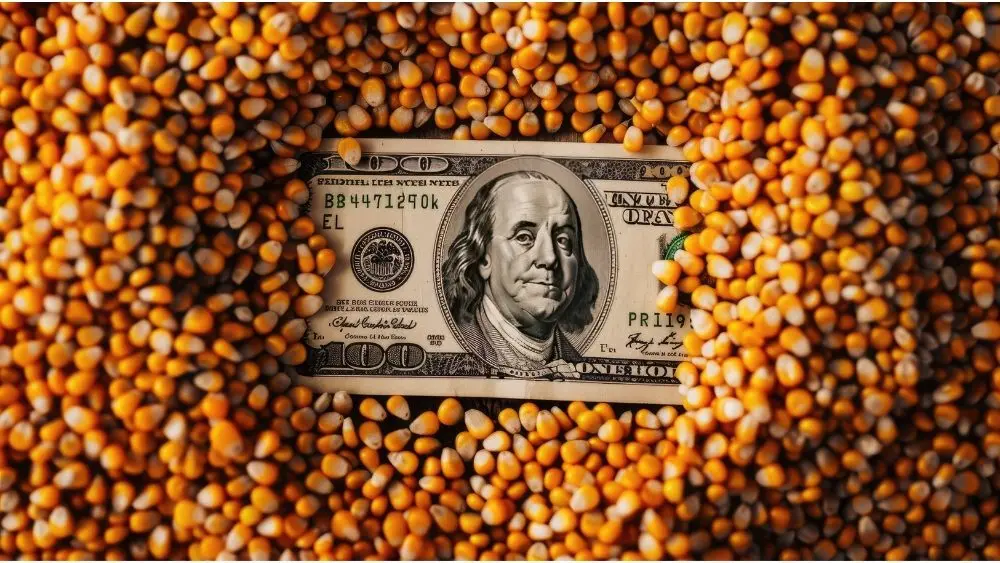
If the agricultural markets wanted to send producers into the Memorial Day holiday weekend on edge, they did their job. The week of May 18–22 delivered a double dose of volatility — first rattling the grain complex on Monday with a massive China trade headline and then closing out the week with a gut-punch in cattle futures, particularly feeder cattle, that left ranchers and traders shaking their heads heading into a three-day weekend.
Grains: A Monday Surge That Couldn’t Hold
The week began with a bang for grain producers. After a subdued previous week, a White House fact sheet detailing approximately $17 billion in Chinese agricultural purchases sent corn and soybean futures roaring higher on Sunday night and Monday. July corn, which had closed the prior week around $4.55, gapped up 14 cents overnight and rallied to $4.81 on Tuesday before reversing course.
“The news was definitely welcomed as far as more of a specific dollar amount that China would be buying from the United States. So rightfully so. It supported the market on Monday,” said Naomi Blohm with Total Farm Marketing. “But then as the week went on, we started to question — well, what quantities are they buying? What commodities are they buying? So a lot of uncertainty then kind of unraveled the rally that we had on Monday, with prices then the rest of the week just starting to drift sideways to a little bit lower.”
Brady Huck, commodity broker with EmpowerAg Trading out of Kansas, echoed that sentiment. “At the end of the day, we had a fact sheet on Monday about $17 billion in Chinese purchases. That’s huge if it comes to fruition, but the market needs confirmation. It’s kind of in a show-me mode right now.”
Despite the mid-week fade, corn and soybeans managed to hang onto gains by Friday’s close. July corn finished the week up 7½ cents and December corn was up 5½ cents. July soybeans closed up 19½ cents on the week with November soybeans gaining 17 cents.
Wheat was a different story. July Kansas City HRW wheat finished the week down 6 cents while July Chicago wheat did manage a gain of 10½ cents on the week and July Minneapolis spring wheat closed up 4¼ cents.
Arlan Suderman, Chief Commodities Economist at StoneX, explained the divergence. “Wheat is under pressure as we’re seeing more Black Sea and European wheat make its way into the Western Hemisphere. U.S. wheat prices have rallied considerably, pricing us out of the market when the Black Sea is still cheap. And so that’s putting a lid on the wheat market right now, despite our problems that we have here in the United States.”
On the other side of the ledger, Suderman pointed to demand as a bright spot for corn and beans. “Corn and soybeans — modest gains. Strong biofuel program helping to support the soybean market. We did see another big soy meal sale on the export market Friday morning as well. Corn getting a boost from big export sales over the past 24 hours, totaling almost 24 million bushels just in one day’s time. Export demand, biofuel demand, helping support corn and soybeans as we head into the three-day holiday weekend.”
The Glass Ceiling at $5 and $12
For grain producers watching these markets, the week highlighted a frustrating pattern that has emerged on new crop futures. Prices have rallied to within striking distance of the psychologically important $5 level on December corn and $12 on November soybeans, only to be rejected each time.
Blohm said the supply picture helps explain why. “USDA has old crop carry out at 2.1 billion bushels, new crop is pegged at 1.9 billion bushels. And that’s enough. That’s plenty of corn. The world is looking for more corn, but Brazil is not having a disaster — so they’re going to be able to fill that gap in August when our crop isn’t quite ready. So fundamentally, the market, based on a supply side, doesn’t have a reason to really rally and get through $5 on corn and $12 on beans.”
For that narrative to change, most analysts agree it will likely take a significant U.S. weather event this summer. Blohm is watching crude oil as another key catalyst. “What I’m watching on crude oil would be if it could get through $120 resistance. That’s been my number for months. If crude oil would get through $120 resistance, then it has broken its two-decade-long downtrend line, in which case we would see new buying come in on crude oil, and as funds buy bushel baskets of commodities, I think they would come back into the ag space as buyers.”
Huck reinforced the weather angle from his vantage point in Kansas, where the High Plains wheat crop has been battered by drought. “The Kansas wheat crop, the Oklahoma wheat crop — the high plains, western high plains in that area has just struggled, and we’ve struggled for moisture. The crop is going to be smaller. Woke up today to a nice rain in southwest Kansas. Great, we needed it. It’s nice to know that it can do it again, but it’s too late for a lot of the acres out here.”
He added that the row crop picture remains very much open. “July corn — we opened really firm Monday, gapped up 14 cents on Sunday night, rallied up to $4.81 on Tuesday, and have since pulled back. This market doesn’t know which direction it wants to go. It’s trading headlines, and there’s a lot of crop year ahead, a lot of production ahead. We need a production problem, a demand surge. We need a story to propel us to another level, and at some point, we’ll get a story to trade. We just don’t know where the funds will want to be when we get that.”
Blohm’s near-term guidance for grain producers is straightforward but grounded in historical context. “Be mindful — we’re in that seasonal window for grains where prices start to drift sideways to lower, and it’s usually over and done with by Father’s Day weekend a lot of years, barring some dramatic weather event in July. Start to think defensive, because it’s going to take some pretty unique stars to align in order to get the market to go higher. Otherwise, I think the path of least resistance might be starting to slip to the downside.”
Cattle: A Market in Freefall by Friday
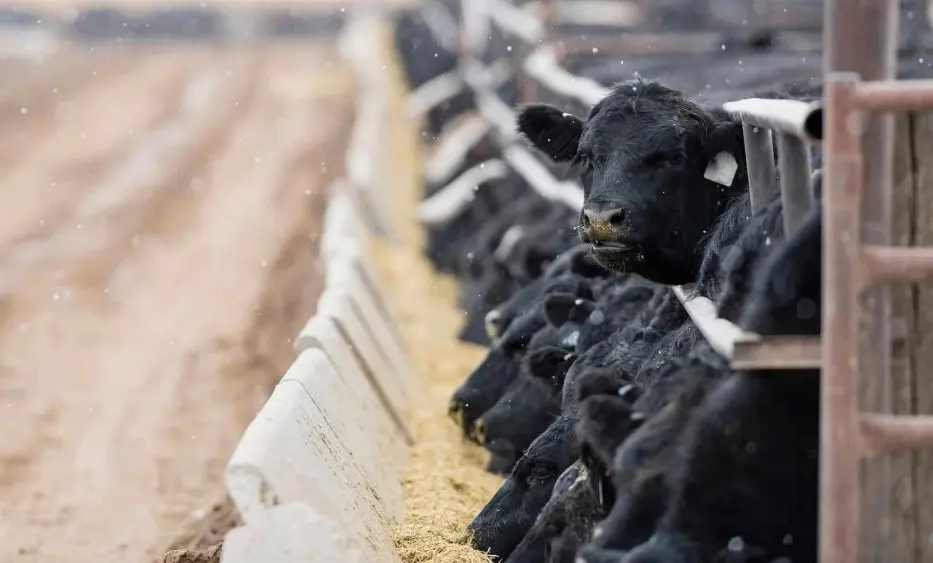
If the grain markets were unsettling, the cattle complex by week’s end was something else entirely. What started as a limit down move in feeder cattle futures on Thursday, escalated further on Friday when expanded trading limits were tested to the downside.
August feeder cattle futures, which had been well off their lows heading into the week, were still trading roughly $6 lower even after recovering $6 off the session bottom — a situation Scott Varilek, livestock market analyst with Kooima Kooima Varilek in Sioux Center, Iowa, described bluntly.
“It’s five o’clock somewhere for a lot of people trading cattle futures, with these wild daily trades,” Varilek said. “To say that you look at August feeders and they’re $6 off the lows is already spooky, and they’re still down $6. It’s just kind of the action we’re having.”
One of the triggers for much of the sell-off was headlines surrounding the Cargill beef processing facility in Fort Morgan, Colorado, which has been effectively shuttered for approximately a month and saw an official labor lockout this week. The broader trading community had been well aware of the Fort Morgan situation for weeks, making the scale of the reaction all the more striking to industry veterans. The explanation, multiple analysts agreed, comes down to the growing dominance of algorithmic trading.
“You can tie it to the Colorado facility, which has basically been closed for a month and well-known in the industry,” Suderman said. “The headline trading algos didn’t necessarily notice that. The market is driven by the algos — computers that read indicators, whether it be headlines, whether it be chart signals or whatever, and put trades on automatically without human involvement. That’s the majority of the trades these days.”
Varilek, who has watched algorithmic trading reshape the cattle markets over recent years, offered a candid take. “We inside kind of hate that ‘money flow’ term, but it’s right. That’s unfortunately what it is. When you get a ball rolling that hard and you’re getting these sells in, the volatility is there. Just try to put in a market order on any size, and it’s going to move the market. The intraday dancing has sure picked up, and with it being in the spotlight, expanded limits here today — that’s just adding fuel to the fire. And it creates a lot of nerves, because we’ve got a lot of inventory that are open, guys that don’t have hedges on.”
He also flagged the role of fund positioning as a critical unknown heading into the weekend. “The fear is that funds might actually be short feeders here now. Every time we’ve had these breaks, there’s been this pile-on effect — pile on of sells here real quick. And then it’s been a trap, several times throughout this rally. Is this one a trap? I don’t know. I don’t know as wild as this is acting, but it’s making you look long and hard.”
Blohm highlighted the compounding effect of lighter holiday volume. “Funds exiting, technical selling happening, and lighter volume today — that pushed the feeder cattle market lower. I had a couple clients who were in that market today and were doing proper risk management strategy with stops and things like that. And it was amazing just how the computers seemed like they were looking for the stops, just because the volume was that much lighter. That’s part of that whipsaw price action we saw today.”
Cattle on Feed: Numbers Add to the Pressure
Friday’s futures action also had some anticipation of the USDA’s monthly Cattle on Feed report, released after the close. The final numbers showed cattle and calves on feed for the slaughter market in feedlots with capacity of 1,000 or more head totaled 11.6 million head on May 1, 2026 — 2 percent above a year ago.
Placements during April came in at 1.70 million head, 6 percent above 2025. Marketings of fed cattle during April totaled 1.64 million head, 10 percent below 2025. Other disappearance totaled 52,000 head, 4 percent above 2025.
Suderman had anticipated a broadly bearish reaction to these numbers. “The on feed count is expected to be up about 1.5% versus a year ago. Part of that is because we’re holding cattle in the feedlot longer — we’re slower to move the cattle out, putting more weight on record carcass weight. Placements are expected to be up from the previous year. That’ll be the first time that happened since the Mexican border closed.”
Varilek also flagged rumors of additional packing plant disruptions adding noise to an already charged market environment. “You’ve got so many big stories happening — you’ve got the plant strike, and you’ve got rumor of another plant maybe going to strike to join them. These stories are getting grabbed, these rumors — not even sure how true some of those are. And then you get energy spiking, you’ve got more posture happening. Everybody’s a little bit nervous.”
Cash Trade Holds Firmer Than Futures
One notable disconnect this week was the relative stability of cash cattle trade compared to the futures meltdown. Despite all the noise, the cash market held reasonably well.
“It was early in the week, we got some steady-to-$265 business to a regional,” Varilek said. “After some of this break, some $260 started to happen. Luckily, our show lists are not overrun. We are feeling like we don’t have to take those lower bids if we don’t want to. We’ve had every opportunity to sell these big $5 increases in cash, and guys took advantage of that. So we’re not lined up wanting to sell so bad here yet.”
By Friday afternoon, he noted that some bids had retreated further. “I had heard some $256 bids and some $405 in the meat. And some of those meat trades had happened.” Whether those lower bids set a new cash trend or reflect a one-day snapshot will be a key piece of the puzzle when markets reopen Tuesday.
Drought: The Fundamental Story Behind the Volatility
Beneath all the algorithmic noise, both Suderman and Huck pointed to drought as the foundational factor that should be underpinning cattle values — and may ultimately cushion any prolonged sell-off.
“The drought is getting serious in many Southern and Western areas of the country,” Suderman said. “So some feeder cattle coming to market maybe earlier than what they would ordinarily, and that also contributing to that higher placement count.”
Huck put numbers to the situation. “Sixty-three percent of U.S. cattle inventory is in drought right now. Forty-seven percent is in severe, and 27% is in an extreme D3-plus drought — and that’s nearly doubled since last month. The drought situation is going to impact whether or not we rebuild this herd, how quickly it rebuilds. That is the tail that’s wagging the dog here at the end of the day. There’s only so much inventory, there’s only so much supply. We can sell this market off, but the U.S. consumer is demanding high quality beef time and time again, and they’re coming and paying for it.”
The Bigger Picture: Is This Another Trap?
For ranchers and feedlot operators wondering whether this week’s break signals a true top in the cattle market or another head-fake, the analysts offered cautious perspective.
Huck pointed to the market’s history of resilience. “These $80 sell-offs — the market came back with a vengeance and made a higher high afterwards. The consumer’s appetite for beef has been resilient. Everybody’s been asking for the last three years, when is this thing going to top out? And if you stood in front of this market over the last three years, you’ve gotten ran over.”
That said, he acknowledged the moment requires clear-eyed risk management rather than wishful thinking. “If you’ve done some LRP or put spreads or futures, there’s probably some equity in those positions that you can go in and protect. That’s what I look for in these types of moves — rather than panic positioning, you use these $30, $40 breaks as opportunities to go protect equity in the positions that you hopefully have on and in place.”
Blohm raised the question that will likely define the coming week’s price action. “Are the funds actually exiting? Is this them finally exiting this friendly cattle story that we’ve had for so many years? Or are they just kind of moving to the sidelines ahead of a holiday weekend? And as we keep an eye on where demand is at — next week is just dependent on the cattle on feed report results.”
Grilling Season: The Demand Wild Card
As Memorial Day weekend kicks off the traditional summer grilling season, the demand picture for beef and pork looms large as a market variable. With credit card balances elevated, gas prices high, and consumers broadly cautious about discretionary spending, the question of whether Americans splurge on premium cuts or trade down to burgers and hot dogs is more than a casual curiosity — it has real market implications.
“Are people passing on trying to smoke a brisket this year? Are they going to smoke pork instead?” Blohm wondered. “Are they going to be grilling steaks at all for the summer? Or are they going to just stick to burgers and hot dogs? So it’ll be very important to see what cutout values are over the next few weeks to try to get a handle on where the demand ends up being for the summer grilling portion.”
Varilek noted that this dynamic isn’t just a beef story. “Beef gets all of that credit when those grills get going. And pork is just kind of left in the dust.” He pointed out that hog futures have been mired in a downtrend even as the cattle market has soared to record levels, a situation hog producers have watched with frustration and more than a little envy.
Looking Ahead: What to Watch After the Weekend
When markets reopen Monday evening following the Memorial Day holiday, traders will face a full inbox of data, headlines, and weather maps. Key items on the watchlist include:
Cattle on Feed reaction: The market sold off in anticipation of a bearish May report. If the numbers come in close to expectations — as indeed they did — the question is whether Tuesday’s trade represents a “sell the rumor, buy the fact” opportunity or further confirmation of a trend change.
Fund positioning (Commitment of Traders): Blohm flagged the Friday afternoon COT release as a critical data point. “Did they exit more of that long position they’ve had in the agriculture space? That would kind of match up with what they seasonally do this time of year — they start to just exit long positions unless there’s a dramatic weather event that comes up later in the summer.”
Weather: Both the wheat belt and the cattle country drought will continue to develop. Corn and soybean country is currently in relatively good shape, but the market will increasingly focus on the July outlook. “If there’s any probability of a prolonged hot and dry period, the market will absolutely jump onto that and trade that,” Blohm said. Father’s Day weekend — which this year falls alongside Juneteenth for a three-day weekend — has historically marked a seasonal peak or “final hurrah” for grain prices in years without a major summer weather event.
Middle East headlines: With geopolitical uncertainty continuing to simmer, crude oil and equity markets remain wildcard factors that can influence commodity money flows on short notice.
For farmers and ranchers watching all of this unfold, Huck’s parting advice captured the week’s mood well: “Stay balanced. With these markets moving around, it’s a good time to adjust your targets, adjust your goals, and get some of those targets working so that if it gets there, you don’t get all bulled up and forget to execute.”
Quotes in this story were gathered during Market Talk broadcasts on Friday, May 22, 2026. Trading futures and/or options involves substantial risk of loss and is not suitable for all investors.